
New Garage Door Installation
Measured, supplied and fitted across the GTA, with the old door taken away.
Call now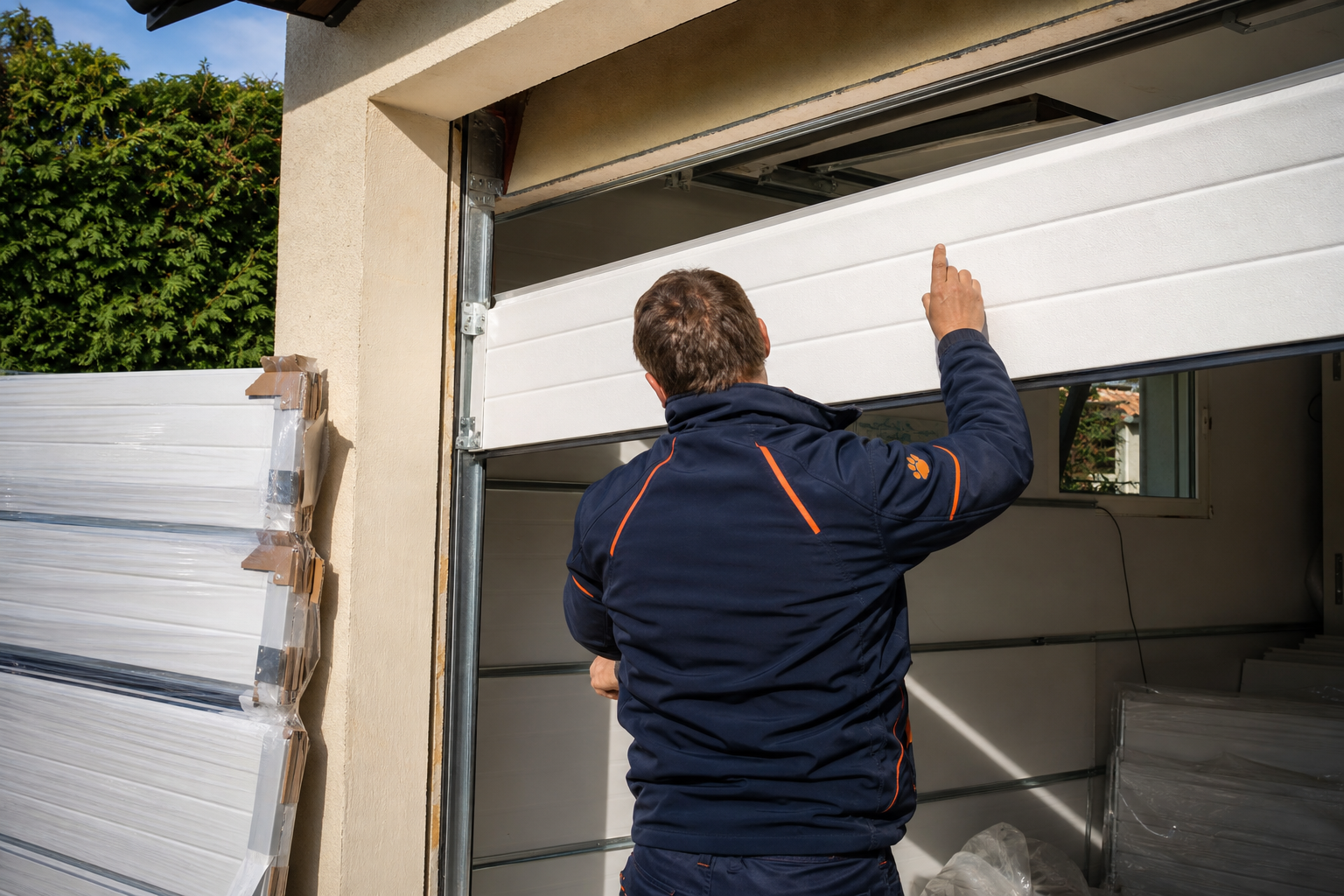
A new garage door is the largest single thing you can change on the front of a house, and it is usually the cheapest way to change how the whole place looks. It is also, on most GTA homes, the biggest opening in the building envelope — so what you choose affects how cold the garage is all winter.
When replacing makes more sense than repairing
- Rust has gone through the bottom section, which cannot be repaired, only replaced
- Several panels are damaged on a model that is discontinued
- The door is a single-skin steel or wooden door with no insulation and the garage is used
- Repeated failures across different parts — springs, then cables, then rollers
- You are changing the look of the house and the door is the dominant element
Insulation, and why it matters here
Doors are rated by R-value. A bare single-skin steel door is effectively nothing. A polystyrene core sits in the middle. A polyurethane-injected door is the warmest and also the most rigid and the quietest, because the foam bonds the two steel skins together. In a Toronto winter, if the garage is attached and especially if there is a room above it, the insulated door is the one worth the difference. If the garage is detached and unheated storage, it is not.
Styles that suit GTA housing
- Raised panel — the traditional default, suits most post-war and subdivision homes
- Flush and modern — clean horizontal lines, works on newer infill and contemporary builds
- Carriage house — the look of side-hinged barn doors on a normal sectional door, common on larger homes in Oakville, Vaughan and Richmond Hill
- Full-view glass and aluminium — used on modern builds and on shops and studios that want daylight
What the installation includes
The opening is measured properly first — headroom, backroom and side clearance decide what track can be used, and a door ordered off a guess is a door that does not fit. The old door and hardware come out and are taken away. New tracks, springs matched to the door’s actual weight, rollers, hinges, cables and weatherstripping go in. The opener is reconnected and its force and travel limits re-set, and the door is balanced by hand before we leave.
The part people forget
A heavier insulated door needs different springs from the one it replaced. Reusing the old springs on a new, heavier door is the fastest way to a snapped spring and a door that has never been in balance. New door, correctly rated springs — every time.