
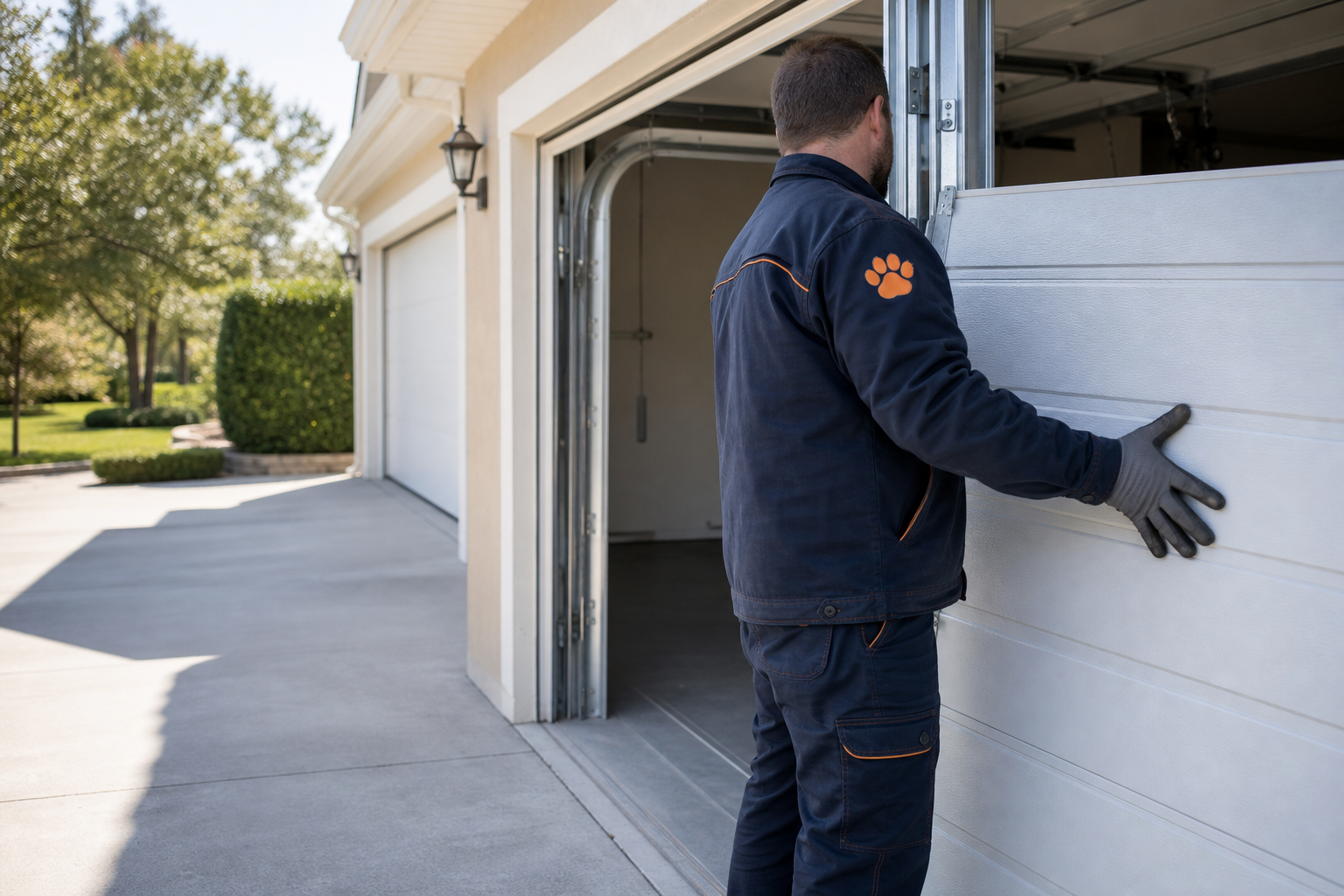
Broken Springs. Dead Openers. Doors That Won’t Move.
Garage door repair across Toronto and the GTA. Tell us the noise it made and we will tell you what it is — with a price agreed before anyone drives out.
What is it actually doing?
You do not need to know the part name. Find the symptom — these are the six we get called about most, and what each one usually turns out to be.
A bang like a gunshot, and now it will not lift
- Likely cause
- A broken torsion spring. The springs, not the opener, carry the weight of the door.
- What it takes
- The spring is replaced in pairs so the second one does not fail a month later.
- Meanwhile
- Do not try to force it up, and do not park under it.
The opener runs, but the door does not move
- Likely cause
- A stripped drive gear, or the trolley has been pulled off the release cord.
- What it takes
- Either re-engaging the trolley, or a gear kit – rarely the whole opener.
- Meanwhile
- Pull the red cord and try lifting by hand to tell the two apart.
It starts to close, then goes straight back up
- Likely cause
- The safety sensors either side of the opening are misaligned, dirty or blocked.
- What it takes
- Realigning and cleaning them. Sometimes a chafed sensor wire.
- Meanwhile
- Check for a box, a bike or a leaf pile breaking the beam first.
The door sits crooked and will not budge
- Likely cause
- It is off the track, usually after a snapped lift cable or a knock from a car.
- What it takes
- The door is re-seated on the track and the cable and drum re-tensioned.
- Meanwhile
- Stop using the opener – running it now bends the track.
Grinding and shuddering the whole way up
- Likely cause
- Worn rollers and dry bearings, or hinges that have gone loose over the years.
- What it takes
- New rollers and bearings, and everything re-torqued and lubricated.
- Meanwhile
- It is not urgent, but it is what wears the opener out.
It is very heavy to lift by hand
- Likely cause
- The springs are losing tension and are near the end of their cycle life.
- What it takes
- Re-tensioning if there is life left, otherwise replacement before it snaps.
- Meanwhile
- A balanced door should stay put halfway up when you let go.
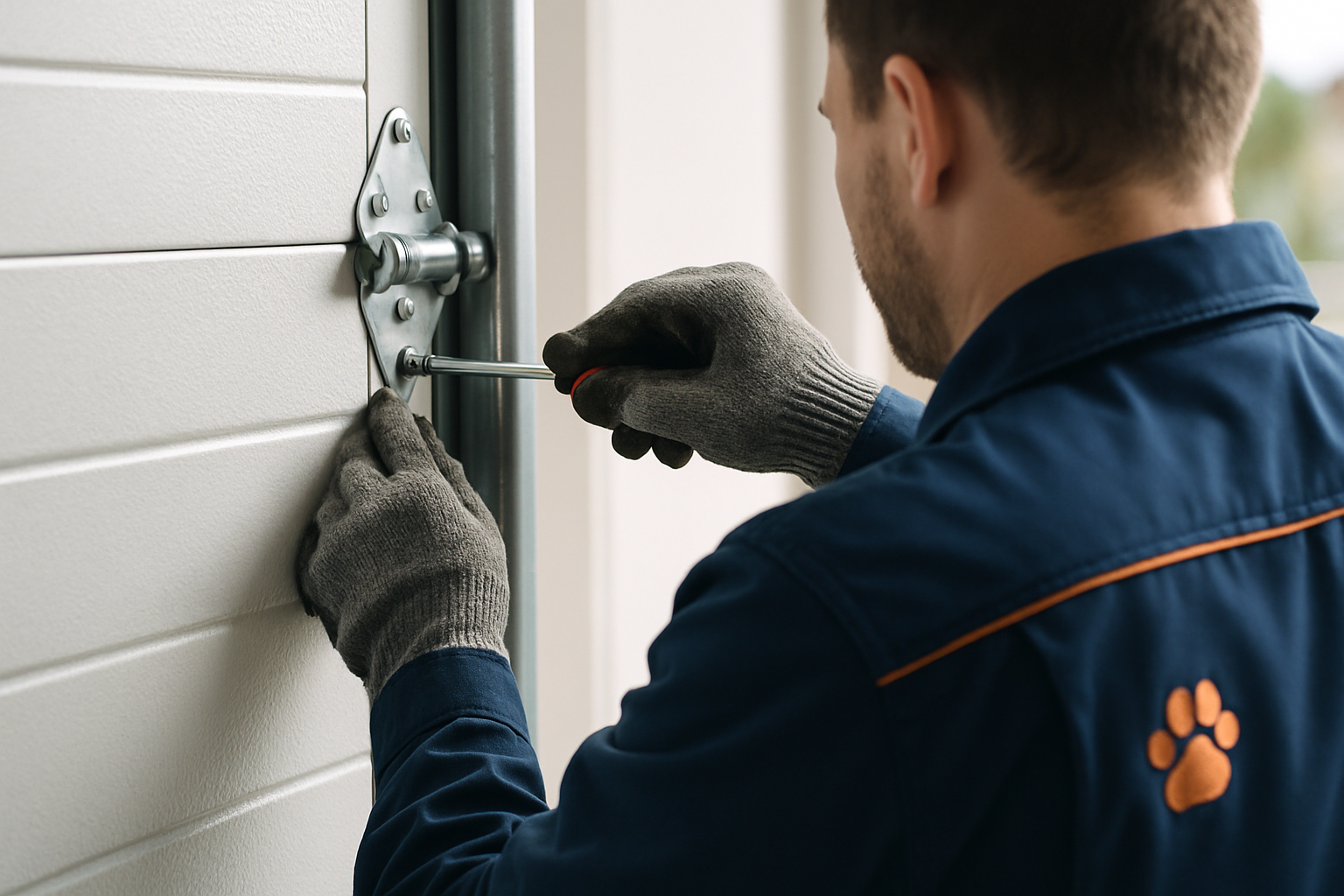
Every part of the door.
And the opener too.
Residential and commercial, repair and replacement.
Nine parts.
Each fails its own way.
Useful whether or not you ever call us: what every part of a garage door actually does, and what you notice when it goes.
Counterbalance the door's weight so the opener only has to overcome the rest.
A bang, then a door that will not liftCarry the door up as the springs unwind.
One side drops, the door hangs crookedWind the cables evenly so both sides rise together.
The door rises out of level and bindsLet the sections travel the curve of the track.
Grinding, shuddering and a very loud doorLet the door fold as it turns from vertical to horizontal.
Cracking at the joints, sections separatingGuides the whole door and holds its weight overhead.
Bent rail, door jams part wayMoves an already-balanced door. It is not a lifting machine.
Motor runs, nothing movesStop the door closing on anything in the opening.
Door reverses on the way downKeeps water, snow, leaves and mice out of the garage.
Draughts, a light gap, water on the floorRepair it, or replace it?
Most doors are worth repairing. Some are not, and we would rather say so before you have paid for a patch than after.
Worth repairing
- A spring, cable, roller or hinge has failed
- The opener is under about fifteen years old
- One section is dented but the model is current
- The door is noisy, stiff or out of balance
- Photo eyes, remotes or the wall button have stopped working
- The bottom seal has perished and lets water in
Time to replace
- Rust has gone through the bottom section
- Several sections are damaged on a discontinued model
- The door is single-skin steel on a garage you actually use
- You are on the third or fourth different repair in two years
- The opener predates rolling-code remotes and photo eyes
- You are changing the front of the house and the door dominates it
No mystery. No price invented in your driveway.
The noise, the movement, and the make if you can see it on the door or the opener.
Most garage door faults are identifiable from the symptom before anyone drives out.
Agreed before we travel. If it turns out to be something else, you hear that before we start.
Springs in pairs, the door balanced, the opener re-set, and everything tested before we leave.
What actually moves the price.
We will not print a number here that turns out not to apply to your door. These are the six things that genuinely change a garage door quote — so you can tell whether the one you are given makes sense.
A double door is roughly twice the weight of a single and needs springs rated for it. It is the first thing that changes a quote.
A standard spring is good for about 10,000 cycles. High-cycle springs cost more up front and last far longer on a door used as the main entrance.
An insulated door is heavier, so the hardware and springs that go with it are different from a bare steel one.
A snapped cable caught early is a straightforward job. The same cable after the door has been run off the track is a different one.
Current models have parts on the shelf. A discontinued section has to be sourced, and sometimes cannot be.
Commercial doors cycle many times more often and need parts rated for it. Fitting residential-grade hardware to them is how you end up paying twice.
Cold is the reason
for half our winter calls.
Garage doors do not fail evenly through the year. Four things happen here between December and March, and three of them are preventable.
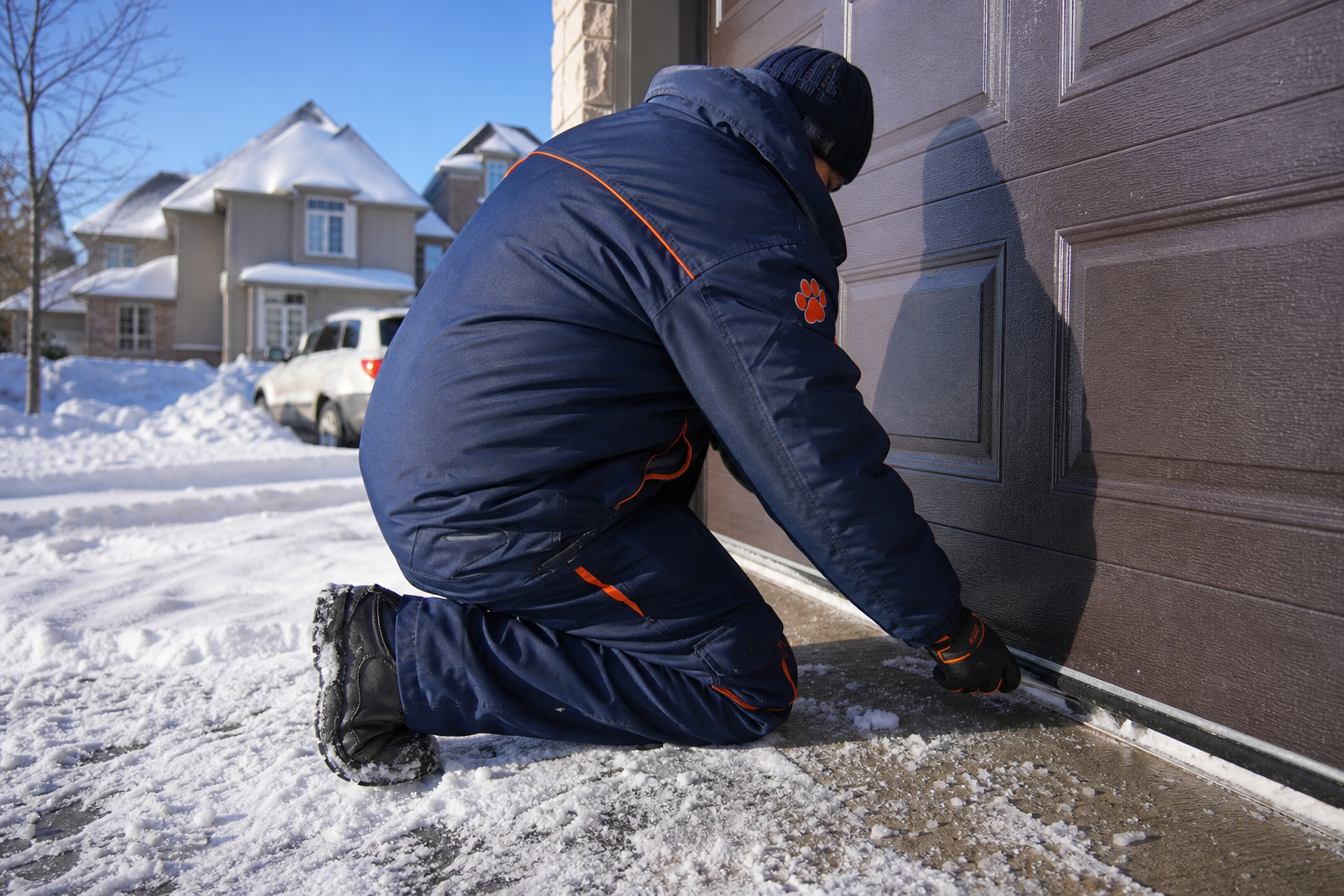
Water runs under the bottom seal, freezes overnight, and glues the door down. The opener then pulls against a door that will not move – which is how gears strip and cables snap.
Old grease in rollers and bearings thickens in the cold. A door that was merely noisy in October stops moving in January.
Steel is less forgiving at minus twenty. A spring near the end of its cycle life usually goes on the first really cold morning, not gradually.
Salt tracked in on the car eats cables at the drum and rusts the bottom section from the inside. Lakeshore properties see this first.
Six things that keep a door out of trouble.
None of this needs a tradesperson. All of it is cheaper than what it prevents.
| Monthly | Watch and listen to a full cycleScraping, banging or a door that hesitates are all early warnings. They are cheap now and expensive later. |
| Monthly | Test the photo eyesPut something in the beam while it closes. It should reverse immediately. If it does not, that is a safety fault, not a quirk. |
| Twice a year | The balance testPull the release cord with the door down and lift it by hand. It should stay put halfway. If it slams or will not lift, the springs need attention. |
| Twice a year | Lubricate the moving partsRollers, hinges, bearings and the torsion bar – garage door lubricant, not WD-40, and never on the track itself. |
| Twice a year | Tighten the hardwareA door cycling daily shakes its own bolts loose. Brackets, hinges and track fixings. |
| Before winter | Check the bottom sealA perished seal is what lets the water in that freezes the door to the slab. |
The makes we see most.
Doors and openers across the GTA are mostly these. We work on most makes — if yours is not here, it is worth asking rather than assuming.
Across the GTA.
Based in Toronto, covering the city and the surrounding regions.
City of Toronto
Halton
The ones that come up on almost every call.
My spring snapped. Can I still use the door?
Do not try. The springs carry the weight of the door, not the opener, and forcing it with a broken spring is how openers get destroyed and people get hurt. Leave it down and call.
Do you charge just to come out and look?
You hear the likely cause and the price for the job before anyone travels. Most garage door faults can be identified from the symptom over the phone.
How quickly can you get to me?
It depends where in the GTA you are and what the day looks like. You will get a real answer on timing when you call rather than a promise nobody can keep.
Should I repair the door or replace it?
Springs, cables, rollers and openers are almost always worth repairing. A door with rusted-through sections, or several dented panels on an older discontinued model, is usually the point where replacing costs less than chasing parts.
Do you work on commercial doors?
Yes. Rolling steel, sectional and dock doors for shops, warehouses and garages, as well as residential doors.
Which areas do you cover?
Toronto and across the GTA, including North York, Scarborough, Etobicoke, Mississauga, Brampton, Vaughan, Markham, Richmond Hill, Oakville and the Durham region.
How long should a garage door spring last?
A standard spring is rated for roughly 10,000 open-and-close cycles. A household using the garage as its main entrance gets through that in about five to seven years. High-cycle springs cost more and last considerably longer, which is usually worth it if the door runs many times a day.
Why does my door reverse before it closes?
Almost always the two photo eyes at ankle height either side of the opening. They get knocked out of alignment, covered in dust or cobwebs, or the wire chafes through where it is stapled to the wall. It is a quick fix, and it is a safety device rather than an annoyance, so it should not be bypassed.
Can I lubricate the door myself?
Yes, and it is the single most useful thing you can do. Use a garage door lubricant on the rollers, hinges, bearings and the torsion bar twice a year. Do not use WD-40, which is a solvent rather than a lubricant, and never grease the track itself – the rollers need to roll along it, not slide.
Is an insulated door worth it in Toronto?
If the garage is attached, and especially if there is a room above it, yes. A polyurethane-injected door is warmer, considerably quieter and more rigid than a single-skin steel one. If the garage is detached and unheated storage, the money is better spent elsewhere.