
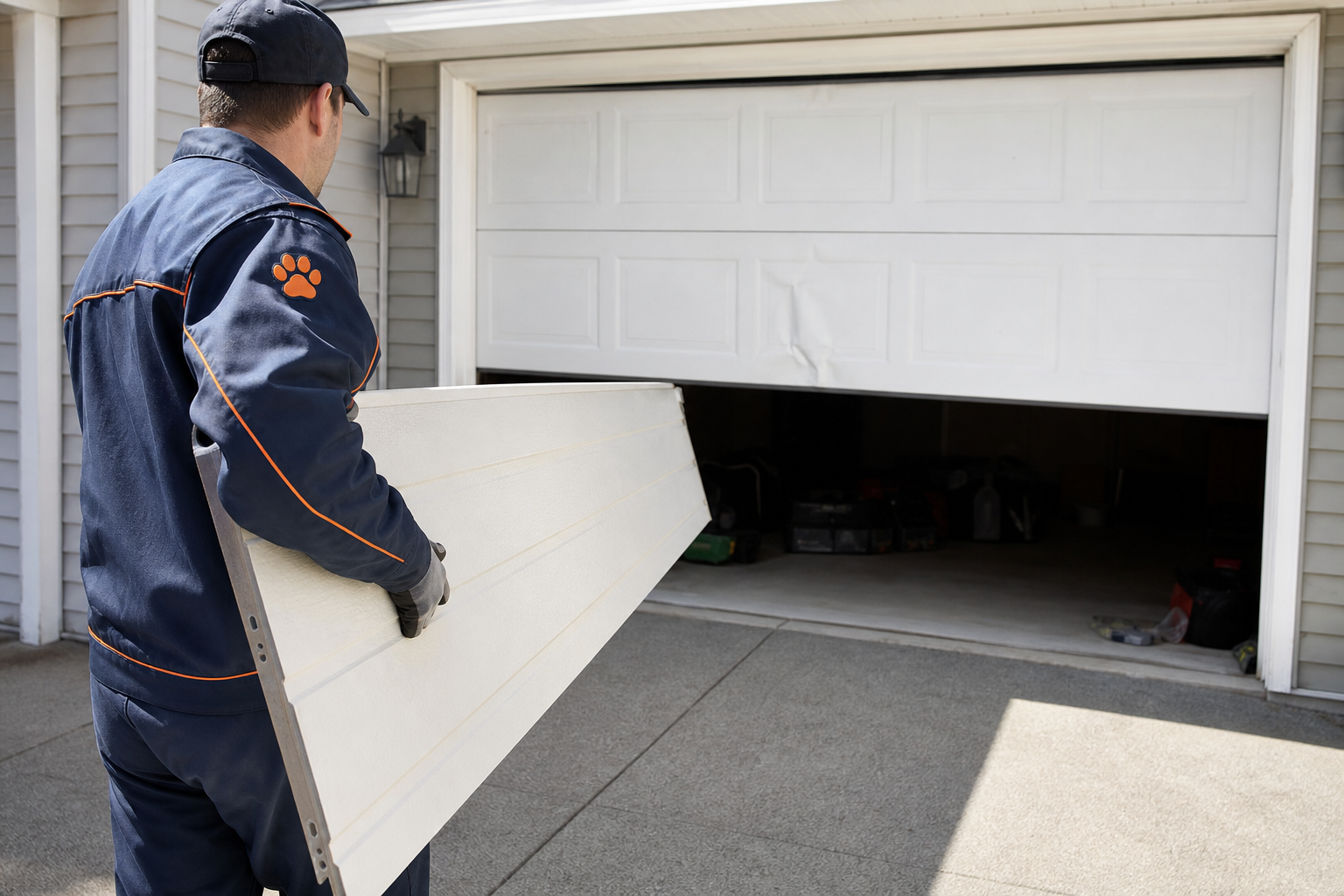
Someone reversed into it, or a basketball post came down on it, and now there is one visibly damaged section in an otherwise fine door. Depending on the door, that section can often be replaced on its own.
When a single panel works
- The door is a current model from a manufacturer still making that section
- The damage is limited to one or two sections, not spread across the door
- The rest of the door is structurally sound, with no rust through the bottom
- The colour is a standard one that can still be matched
When it does not
Older doors are the problem. Panel profiles get discontinued, and a section that is close but not identical looks worse than the dent did. Colour is the other issue — a new white section against fifteen years of weathered white is visible from the street, and on a sun-facing door it is very visible. If the door is old enough that we cannot get the right section, we will say so rather than fit something that does not match.
The bottom section is a special case
Bottom sections take road salt, standing water and snow all winter, and they rust from the inside out. A bottom section that has gone through is not a repair — it is also the section that holds the bottom brackets, which are under cable tension. That is a replacement, and it is worth checking the section above it at the same time.
What we check while the door is open
Whatever hit the door hard enough to dent a section usually did something else too. We check the rollers and track on that side, the hinges either side of the damaged section, and whether the door is still running level — because an impact that dents a panel often also nudges the track.
Being straight about cost
Panel replacement is worth doing when it saves you most of the cost of a new door. On a cheap builder-grade door that is already ten years old, one section plus labour can approach half the price of a new insulated door that will be warmer, quieter and under warranty. We will tell you the two numbers and let you decide.